
Short Vs Long Term adaptations:
There are various short and long term effects of exercise. The short term adaptations can be classified as those that occur immediately during a session eg: the result of a warm up. Long term adaptations are what the body does over time to progressively cope better with the types of training the body repeatedly undertakes.
- Short term effects therefore are those that occur as part of a warm up and continue throughout a given session.
- Long term effects are those that occur as part of a program of exercises over a period of time
Short Term Adaptations
In the broadest terms, the warm up serves two purposes, to (i) Physically and (ii) mentally prepare the client for what they are about to do. The following will take you through the effects and methods to structure a warm up to achieve these two principles, as well as how this affects the short term capabilities of the body as a result..
Physiological & Neurological Effects on the body:
Physiological – Cardiovascular:
Bringing in a cardiovascular component to the warm up is extremely beneficial. It raises the pulse/heart rate, providing blood to the working muscles, and raising the core temperature by up to two (2) degrees Celsius. Any increase in intensity over resting levels has this effect, but maximising it by utilising a specific component to stimulate the following effects will provide significant increase in work rate and ability for the session to follow.
The increased blood flow provides nutrients such as protein for repair, carbohydrates and fat for the replenishing of ATP, as well as micronutrients, such as calcium, sodium, potassium and magnesium which are part of the chemical processes of muscle contraction. Stroke volume and force of contraction increase within the heart, pumping more blood with each beat, and increasing blood pressure during exertion as a result.
The respiratory systems increase breathing rate, as the client starts breathing more frequently and deeply, they increase the oxygen supply and content of the blood as it leaves the lungs to be transported to the heart. The lungs expand more during exercise, increasing the volume of air inhaled and exhaled with each breath, increasing the oxygen supply reaching the alveoli, and used in gaseous exchange to provide oxygen to the working muscles during aerobic training, and in the rest intervals between anaerobic exercises and sets.
As a result of these changes, the skin will become flush and redder in colour, and to control body temperature, the body will begin to sweat.
Physiological – Muscular and Skeletal:
The increased blood flow brings nutrients to the working muscles, increasing their ability to contract concentrically, eccentrically and isometrically. As a result of vasodilation, where the passageways of the blood vessels increase diameter, more blood can flow, this has a secondary effect of heating the muscles with the warm blood from the core. As intensity of movement/exercise increases, friction and chemical reactions generate heat in the muscles themselves, and this warm blood is circulated to the heart, and round the body. In this way the whole body temperature increases, while sweating is used to prevent overheating.
Increases in physical activity also stimulate the secretion of synovial fluid, a lubricant, which helps the joint move more freely, allowing the body to more easily replicate the movements and skills in exercises during training.
Neurological: Synapse activation.
As the body warms up, synapses in the brain Muscle fibres activate quicker, increasing the amount of force generated in the muscle.
Reaction times are also reduced, allowing more accurate and smaller adjustments to be made in technique, a critical factor in the performance of successful maximal attempts.
Depending on the type of warm up, the activation of larger (Type II) muscle fibres will allow for even greater levels of force generation.
As increases in strength, and increases in size are two separate responses to stimuli, the ability to activate fast twitch fibre is a large part of increasing strength gains.
Using movements that will be part of the session or competition event helps the brain activate sequences of neurons. These sequences are like the software that runs during competition lifts. With deliberate practice and repetition of movements, the body becomes more skilled at the performance of movements, such as the snatch and clean. This is part of proprioceptive training.
*Athlete Key Point
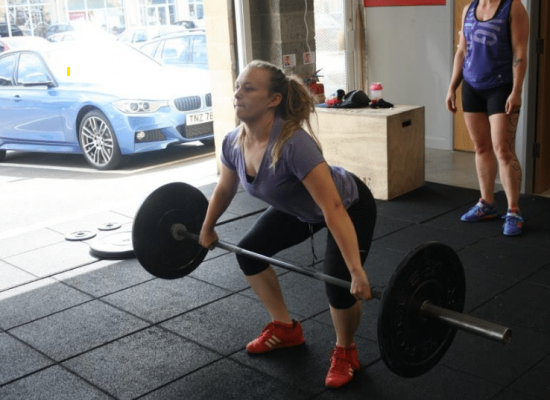
How the structures of the session and warm-up is used will influence each session, as well as the potential improvements that can be gained.To get the most out of each session, the warm-up should be specific to the activity to be performed. eg: if the session is based around squatting, then the squat movement, or variations of the movement should be incorporated within the warm up. Gradually increasing speed or range of movement can be part of an aerobic warm up that incorporates stretching while giving the individual appropriate stimulus similar to the training session ahead.
When you get a technical exercise on your program such as snatch, use all warm ups (up to around 70%) to build specific skills for the session. eg: do complexes, a mix of hangs, pulls and full lifts depending on what you want to do well when you get to your working sets.
See the warm up resource page for more detailed information.
Long Term Effects of Exercise:
The body adapts to stimulus. It doesn’t matter if it’s disease or exercise, the key word is adaptation. When faced with a challenge commonly referred to as a stress, the body reacts and adapts to this stress to better cope with it in future. The process by which this occurs is discussed in our principles of training module. In the case of illness the body makes antibodies, which should it then be exposed to the illness again, can fight the illness more effectively.
When we train the body, it makes these same adaptations to existing systems, to allow it to better perform these activities in future, this could be by increasing the availability and ability to use oxygen, thicker muscles or faster movements. The body adapts to the specific type of training or stimulus that’s been trained. This is where the term specificity comes from in program design.
Below are some adaptations that the body makes depending on the type of training it performs:
Cardiovascular
Aerobic training, such as long swims, marathons, long slow duration training etc. see several changes to the body, most notably to the heart, lungs and blood vessels:
The Heart
- Left ventricular hypertrophy: The muscle wall of the left ventricle thickens, allowing it to stretch further and beat stronger. This allows more blood to be pumped in each beat (stroke volume), as well reducing the number of times per minute the heart has to beat at rest, resulting in a lower heart rate, one of characteristics the we can check as a general sign of fitness.
- Increased Cardiac Output: During training , this increased ability to pump blood in each stroke is put to good use, increasing the total amount of blood pumped per minute during exercise. With a higher heart rate during training, that pumps more blood with each beat, the heart can pump significantly more blood during exercise
Blood Vessels:
- Increased capillary density: higher numbers of capillaries in the muscle tissue allows for greater diffusion of oxygen into the various working cells. Like adding extra roads to small-cul-de sac’s to increase the number of vehicles that can transport individuals. In this same way, mitochondria and red blood cells can transport oxygen and macronutrients to be used in the tissues as fuel. The process of making new blood vessels is known as angiogenesis.
- Increased mitochondria and mitochondrial enzymes: More mitochondria, means more oxygen being used to convert fat into ATP, aerobic training increases the number of mitochondria within the cells, increasing the bodys ability to utilise oxygen for fuel. The increase in enzymes associated with mitochondria facilitate this process.
- Increased efficiency at removing waste products: as a result of angiogenesis, the body can remove waste products more efficiently than before.
Lungs
- Greater Volume: the muscles controlling the lungs become stronger, and can increase the amount of air inhaled and exhaled in the lungs
- Alveoli: The number of alveoli within the lungs increases, increasing the surface area inside the lungs. This increase, allows more gasseous exchange in more numerous alveoli, and increases the oxygen supply to the blood, and subsequently to the rest of the body.
Muscular Endurance
Muscular endurance training occurs where the creation of blood lactate increases beyond the rate of removal, causing a build up of lactic acid. It is different to aerobic endurance, as it is specifically in the muscles targeted.
For instance, if you were to attempt two fitness tests, a 2km cycle, and a 2min repeated squat test. achieving as many squats as possible in 2 minutes would fatigue the legs, but the arms for instance would be relatively unchanged and able to continue to work at previous levels. The cycle on the other hand would have the entire body fatigued and the effects would not be localised to just the legs.
Adaptations to training in muscular endurance include:
- Increased lactate tolerance: the muscles are able to sustain longer levels of work without reduced ability to contract.
- Increased lactate buffering: lactic acid acts as a buffer within the blood stream to reduce or hold off the increase in acidity of the muscle during active periods
- Increased lactate clearance: increased removal of lactic acid to be re-utilised in the cori cycle.
Strength and Power
Strength training, contrary to popular belief is not hypertrophy (increased muscular size). These are two different stimuli. The primary adaptations to strength training within the body are:
- Increased activation of motor neurons, and thus increased force of contraction within the muscles.
Think of it in the context of a tug of war team; if only some of the contestants pull, the force against the opposing team will be relatively small. If more and more of the team start to pull, the force increases. In this way, increasing the number of motor neurons activated, activates more contractile fibres, and increases force of muscular contraction. - Rate Coding: in brief, this is the frequency at which a motor unit can fire, in our previous example, this is the equivalent to getting all the active tug of war participants in the team to pull together in a repeated rhythm that is faster than before.
At its most basic, strength and power training increases the ability of the body to utilise and activate more of the muscle fibre that makes up a particular muscle or muscle group.
Flexibility
Flexibility training increases the range of movement around a given joint. This is primarily achieved by increasing the length of the muscle fibres that are restricting the movements occurrence.
Developmental stretches: Works by allowing muscle spindles, which detect speed of movement of the muscle to become inert, and allows the Golgi Tendon Organ (GTO) which detect tension in the tendons to become dominant. This allows for slight increases of range each time the Spindles become inert.Developmental Passive stretching is performed by letting your client move as far in to a stretch as they feel comfortable. Once there, hold for 25-35 seconds; Inhale, and then simultaneously exhale and increase the stretch, holding this new position for a further 25-35 seconds. Repeat the process two to three more times, watching where the client struggles to increase much further.It is important that the maximum muscle length during the stretch be maintained throughout. Several other methods of stretching fall under the heading of “Proprioceptive neural facilitation”, which describes the methods of stretching wherein; Proprioceptors (sensors that provide feedback on movement) and motor neurons (that cause muscle contraction), controlled within synapses of the brain are programmed to allow for increased active or passive ranges of movement. the ways this can be achieved are;
Active Resistance (Autogenic Inhibition Reflex): PNF encompases more than one stretching technique, however the primary method of PNF in this instance utilises the principles of the autogenic inhibition reflex, where a muscle that is being contracted, temporarily reduces its inhibition and excitability, meaning it can be lengthened more before it can begin to resist the lengthening process ie: stretching.To perform active resistive stretching, the instructor/coach brings a muscle to a full range of movement, where the muscle begins to resist further lengthening. The client then tries to resist by actively, concentrically, contracting the muscle being stretched (such as knee extension during a quadricep stretch). The instructor prevents the client from extending, merely holding the joint in place while the movement is resisted for a period of 5-15 seconds, then instructs the client to relax. Instantaneously, as the client relaxes, the instructor increases the stretch in the muscle fibres, bringing the joint to an increased range of movement. This can be repeated as necessary, but should not be done with such force as to cause injury.
CRAC Stretching (Reciprocal inhibition):The second process is that of reciprocal inhibition, this principle utilises the relationship between antagonistic and agonistic muscle groups such as the examples below to stimulate an eccentric lengthening of the required muscle. Reciprocal inhibition describes the action of the inhibitory interneuron of the spine, which stimulates an eccentric lengthening of the opposite muscles to those being actively contracted, such as the lengthening of the tricep, when the bicep is activated in a bicep curl. Without this reduction in inhibition, the elbow would be unable to flex.To utilise this inhibition in a stretch, allow the client to bring the muscle to a point of tension, where the stretch is being resisted. Have them then contract the antagonistic (opposite) muscle to the stretch. This will allow the increase in eccentric length of the desired muscle. egK during a quadriceps stretch, ask the athlete to bend their knee, or bring their heel to their bum while already in a stretched state. This will allow you to further increase the stretch by applying light force to assist the direction of the stretch.
Bones
One other adaptation worth noting is the effect on the skeleton:
- Appositional Growth, thickens the outside diameter of the bone, this occurs as osteoblasts respond to compression forces, building new bone around the circumference of the diaphysis, increasing the overall diameter, and thus ability to resist force of the bone.

- Bone Mineral Density (BMD): increase the quantity of minerals such as calcium and phosphorus present within the cross sectional area of bones. By increasing the quantity of calcium and phosphorous, we increase the strength of the bone, and its ability to resist external loading forces and impact.
Physiological adaptations by anatomical area
Exercise and Blood Pressure:
- Short Term:
- Increase in systolic pressure, in line with increasing heart rate
- Diastolic pressure remains unchanged
- Long Term:
- Reduction in overall blood pressure, due adaptations above
- Improved regulation of blood pressure
Venous return and Blood Pooling:
Suddenly stopping an exercise session has several knock on effects in the body. The flow of blood returning to the heart is assisted by the contractions of working muscle. Gravity assists blood in moving downwards, while the pressure of the blood flow maintains circulation. The circulation is assisted by muscles squeezing the veins, as this works in the same way peristalsis works within digestion. The blood is forced forward by the muscle contractions around the veins, and the non return valves prevent the blood from flowing against the direction of flow.
By stopping movement abruptly at the end of a session, blood may pool in the extremities. In serious cases, this lack of circulation can lead to dizziness or fainting. By gradually reducing intensity during sessions, or warming/cooling down, the heart rate lowers more gradually, allowing the continued circulation via venous return mechanisms, and provision of nutrient rich blood to the various tissues. The legs are extremely effective at this, as the largest working muscle group within the body.
an appropriate warm down also has an added benefit of reducing the effects of delayed onset muscle soreness (DOMS). This occurs as the body repairs damaged tissue as a normal recovery mechanism of training. The muscles can be stiff and sore for a number of days, usually worst on the second day.
DOMS has a number of causes:
- Introduction of new exercises
- Change in exercise intensity or component
- Increased eccentric loading.
Posture:
One exceptionally important aspect to bear in mind is that of posture. preventing kyphotic or lordotic posture in clients will help to maintain a neutral spine, that is more stable and resistant to injury during training. This can be improved by training the weak musculature and stretching tight musculature.
In all training, full range of movement is desirable, with the exception being the immediate stages of recovery from injury, where concentric movements should occur, and eccentrics should be phased in appropriately after the first couple of weeks depending on severity.
Some good examples of training to improve posture include:
- Front Squats
- Multi-joint exercises to address stability and weakness issues
- Well chosen cable machine exercises
- Core stability training
Nervous System and role in athletic development
Introduction
The nervous system is the main control and communications centre of the body. It is supported by the endocrine system, the system responsible for hormone production and regulation.
It is one of the key systems responsible for homeostasis, where the body remains in its current state. The nervous system, including receptors and transmitters, ensure the body functions efficiently, communicating via the neural network throughout the body, composed of neurons/nerves.
The nervous system has three key roles throughout the body:
- sensory: gathering information , inside the body and in the body’s immediate environment, such as heat, light, gravity (proprioceptors), pH. smell, sound, touch etc.
- Integrative – to analyse and interpret the changes it senses and select the appropriate response
- Motor – to respond to the changes by signalling the required action, e.g. the secretion of hormones from the endocrine glands, or by initiating muscle contraction
There are two main divisions of this system. Click them to explore:
- The Central Nervous System (CNS)
 The CNS (Central Nervous System) is a complex series of nerve tissues located in the brain and spinal chord. These are responsible for processing the information received eg: sight, touch, smell, hunger, temperature, vibration, pressure, sound etc. It then either consciously or unconscionably transmits a an appropriate response to the relevant area.
While the brain handles the bulk of sensory input and impulses, the spinal chord is also able to make snap decisions without the brains input, in the form of the reflex arc, where immediate response is required, eg: pain.

2. The Peripheral Nervous System (PNS)
The Peripheral Nervous System (PNS) or encompasses everything else. It is the main information gatherer throughout the body that relays the important sensory information from afferent (sensory neurons) providing information on sight, touch, smell, hunger, temperature, vibration, pressure, sound etc. that it attains.
It then passes this information to the brain via interneurons, where the brain processes the information and sends an appropriate response to make a conscious or unconscious decision. The difference between the conscious and unconscious decisions are down to the parts of the nervous system described as:
- Somatic – controls voluntary (conscious) functions, such as skeletal muscle contraction and movement, e.g. standing, walking, lifting a weight
In this instance, a peripheral nervous signal could transmit the signal to let your body/brain know that it’s hungry. The brain will process this information, then the somatic nervous system will be responsible for activating efferent (motor neurons), walking to the fridge, making a sandwich and eating. At this point the task is taken over by the autonomic nervous system.
- Autonomic – which controls involuntary (unconscious) functions, such as smooth muscle contraction, e.g. digestion. This includes two main parts:
- Sympathetic branch – speeds things up, e.g. increases heart rate and breathing rate
- Parasympathetic branch –slows things down, e.g. reduces heart rate and breathing rate
The smooth muscle contraction of peristalsis transports the bolus (ball of chewed food) that you just swallowed, to the stomach, where it will be digested, before moving through the small and large intestines, to have whats left defecated at the other end. This is all taken care of by the autonomic nervous system.
Movement and the motor neuron:
In order for muscles fibres to contract, they must be activated. This occurs through the utilisation of a motor neuron.
 A motor neuron connects to several muscle fibres at neuromuscular junctions. When the motor
neuron dendrite receives an electrical impulse, it transmits the signal, along the Axon, which triggers
the activation of all muscle fibres to which it is connected.
A motor neuron connects to several muscle fibres at neuromuscular junctions. When the motor
neuron dendrite receives an electrical impulse, it transmits the signal, along the Axon, which triggers
the activation of all muscle fibres to which it is connected. This activation of all associated muscle fibres is called the “all or nothing” principle
The number and type of fibres governed by the motor neuron will determine the resultant strength and speed of contraction.
The electrical signals travel from one neuron to the next, with the differences in charges (positive and negative) being separated by a membrane. These membranes can be affected by mechanical movement, hormones or chemicals. If there is sufficient chemical presence or tension on the membrane, it causes depolarisation, where the electrical signal is then transmitted up to the CNS.
When controlling the force of muscle contraction, there is increased force generated when the same motor unit is activated in greater frequency, this is more common when smaller muscles determine the movement sought.
Alternatively, the CNS increases the force of contraction through recruitment of a greater number of motor neurons; choosing which motor units to recruit based on the desired effect for high or low levels of power output.
In order for muscles to contract most efficiently, they must be preloaded. This means that a degree of resistance is already active on the muscles, engaging the cross bridges within the sarcomere, this is used an all exercises involving resistance, eg bodyweight, barbell, kettlebell, suspension etc.
Proprioception
Proprioception describes the utilisation of specialised sensors within the muscles; allowing the CNS to calculate where the various muscles of the body are relative to each other, and how gravity is working on them.
This allows the brain to calculate in relative 3d space, where each body part is at any given time. An example of which, would be the ability to touch ones nose with both eyes closed.
This is extremely important in its application to client training in two major areas.
- Firstly, the proprioceptive stimulus and heightened awareness and comprehension of the signals being sent by the proprioceptors is extremely important in movement skills.
This motor control is governed by the body’s ability to interpret and react to the information supplied by the proprioceptors.
Through increased practice and familiarity with any movement skills, the body is able to adjust more quickly and more accurately, producing force more efficiently, resulting in an increased efficiency and output from the muscles through familiarity with the exercises. The key proprioceptors within the muscle that relay this information are GTO’s and muscle spindles, which detect movement in the muscles, much in the same way accelerators detect the orientation of the screen in your smart phone. - Secondly, developing flexibility.
Understanding the difference in the proprioceptors allows us to increase flexibility over time. For example, the two main proprioceptors are the muscle spindles which detect speed of movement within the muscle, and the Golgi Tendon Organs (GTO’s) which detect tension in the tendon.
These principles are combined during developmental and PNF stretching, taking the muscle to a primary point of tension (the first point at which the muscle spindles inhibit increased range of motion), holding this for a period of time to allow the spindles to go inert, before increasing the degree of extension within the muscle, thus temporarily increasing overall flexibility.
Conditioning the muscles by regularly stretching causes the muscles to adapt, increasing the length at which they are inhibited from extending further, and allowing greater range of movement when performing various forms of movement skill.
Excellent further resources:
beware the rabbit hole of youtube…

Comments are closed, but trackbacks and pingbacks are open.