
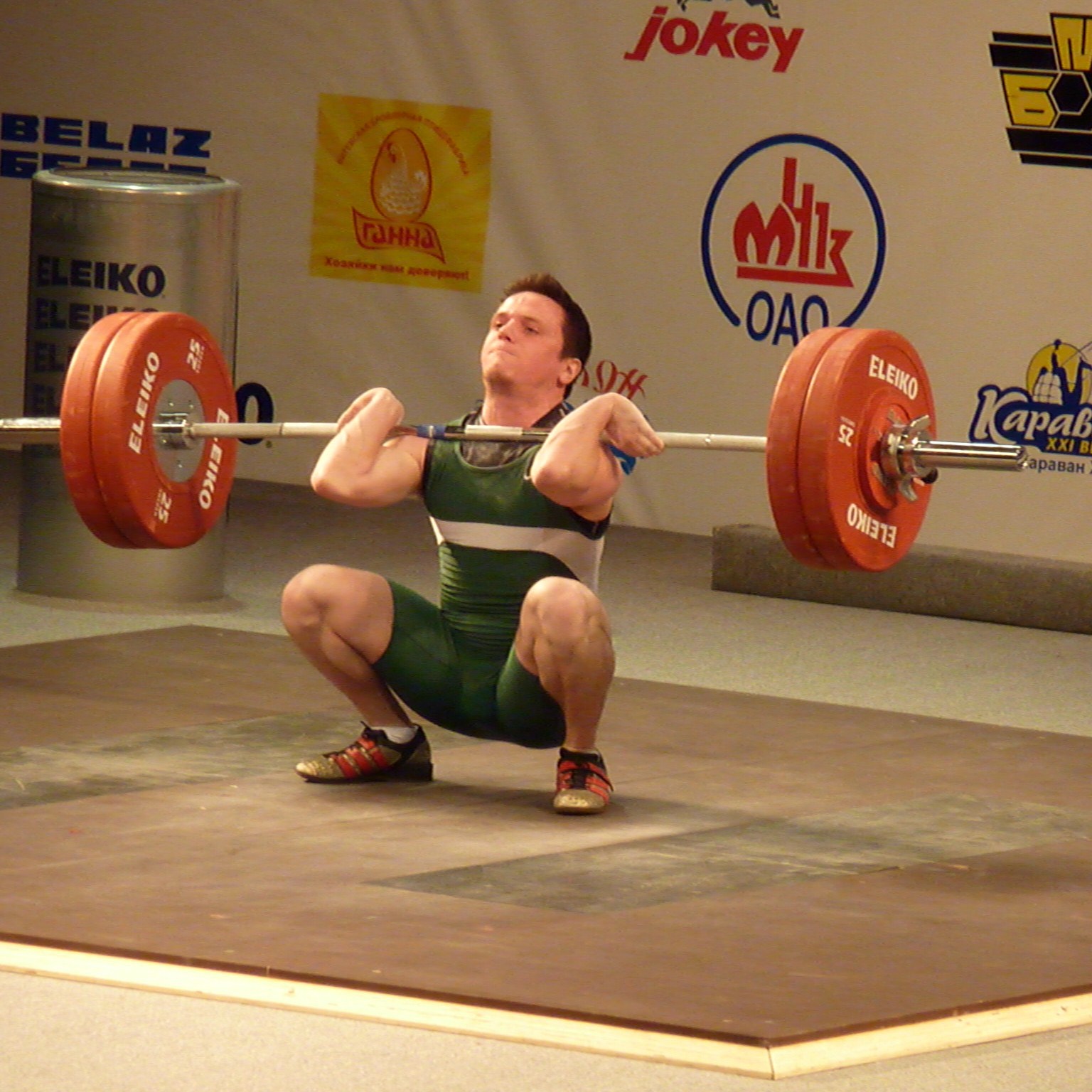
Developing foundations of flexibility, stability and control:
–Step 1: Flexibility–
Using a basic screening module such as Cook to generate scores and further test notes for each of your athletes, you can begin to prepare methods to prepare lifters for the fundamentals of sports conditioning, utilising movements from within weightlifting, powerlifting and other components of strength and power training.
Due to the extremely high levels of flexibility, activation and control needed for strength and conditioning preparation and performance, discussing findings with medical personnel such as the team physiotherapist is one way to improve coaching knowledge.
Even simple scoring systems for the overhead and front squat can give the start of corrective strategies and lift preparation.
- Scored 3 No or minimal limitations or issues found during the test
- Scored 2 Has limitations which can be addressed to improve performance
- Scored 1 Has severe limitations and needs corrective stretches and exercises
- Scored 0 Experienced pain during test, needs referral to a healthcare professional
As a result of any screening process several key observations can be made.
The purpose of the test is to look at athletes movement capacity by assessing the athlete for tightness (insufficient flexibility), weakness and instability (strength of major muscles for their sport, as well as the muscles that assist sports movements)
It is also important to distinguish between a structural flaw, be that flexibility or stability issue, and technical issue such as functional control as explained below.
The screening test is used to highlight issues of each individual; so normative data is not particularly useful in this instance for comparison, knowing how many physical issues an athlete has compared to other athletes is like comparing a house that’s a little bit on fire, and a lot on fire.
In the end it’s still on fire.
Within a team or group of athletes, there will be a range of results, and the following information will not only provide coaches with an understanding of the issues faced by the athletes, but what relevance they have to their sporting performance, and how to address what’s been assessed/observed during the tests.
Corrective Strategies: Structural
1) Flexibility – Flexibility issues should be addressed first via corrective exercise, these will prove extremely beneficial in complex movement skills, as limitations in flexibility will make complex skills harder to both learn and perform.
If participants cannot straighten arms, or dorsiflex the foot (point the toes and ball of the foot upwards) it will have a negative effect on squat depth, power output, and potentially increase the likelihood of wrist injuries if performing cleans as part of training.
During the screen, limitations in flexibility show up as a consistent and gradual unwanted change in an athlete’s position during the squat. The reason behind this is, as a muscle gets to its longest point, it cannot keep lengthening and so the body compensates by either stopping the movement, or adjusting the position of the body to allow different muscles to take over the action. This is known as synergistic dominance, and will lead to muscle imbalance, causing forces to be unequal when in competition or training; or muscle tears where the muscle has external forces attempting to lengthen the muscle beyond its capabilities to lengthen.
If not corrected it can lead to injury through imbalance or in serious cases retirement from the sport, such as Paul O’Connells retirement from international rugby due to a serious hamstring tear.
2) Stability – Stability issues should be addressed second, these occur when the participant has the capability to move through full range, but not the capability of controlling the movement.
This shows within the screen as unstable joints or ‘wobbling’ of the limbs while performing the movement.
Instability is also a proponent of injury risk, where muscles are unable to properly stabilise the joint during movement. Running for instance on an unstable hip will repeatedly strain muscles attempting to hold the joint in place.
There is a two fold problem with instability, as it increases the likelihood of injury from repetitive strain, but also reduces performance of the athlete.
Using a vertical jump as an example; if a coach was to test an athletes’ ability to jump and did the first jump from a stable surface, such as a basketball court flooring, and the second test with the athlete standing on a safety (crash) mat; the crash mat jump would score significantly less. This is because the soft nature of the crash mat absorbs the force of the jump, in essence the instability of the surface of the crash mat reduces the amount of power the athlete can transfer into the floor.
An unstable joint has much the same deficit. The body tries to put maximal force through the limb, but some is absorbed through unwanted movement, or instability of the joint itself. This reduces the ability of the athlete to accelerate, add power to the lift, and generate maximal force for the heaviest weights.
Corrective Strategies: Technical
3) Motor Control – These issues tend to be noted as the athlete performs the movement and muscles related to posture or control during the movement disengage when they should be active. It would be seen in areas such as rounding of the upper back during the squat, or when the athlete lifts their arms overhead. In essence, it is when a athlete cannot distinguish between parts of a movement, and would be more recently described as physical literacy.
Within the body are proprioceptors, these are similar to the brain having a 3D map of the body. It is why individuals can close both eyes and still touch their nose, such as in a sobriety test. The brain has in built calculations of the lengths of the limbs and where they would be in relative 3D space when they are moved.
The more a athlete trains, the more detailed this map becomes in specific areas, such as increased hand eye coordination in Hurling, and increased foot eye coordination in football. The sight provides a reference point, and the brain can make the necessary calculations.
The areas where this are lacking usually show up as poor core stability, and is seen with areas such as poor thoracic control. As the core is the central component of the body, which each of the limbs pull against in order to move, having greater physical control of the core, and a detailed map of the body as a whole becomes increasingly important in performance sport, allowing the athletes to learn new skills and complex movements quicker, control their bodies more effectively in full ranges of movement, as well as brace the core and back during lifts to reduce instances of injury.
Once all structural areas of concern are within acceptable levels, this final component of physical literacy will provide increased advantage and more consistent increases in strength.
The key stages to remember:
- Mobilise – increase flexibility and build warm ups into sessions that allow athletes the lowest risk of injury and the greatest freedom of movement
- Stabilise – Build strength and control through the full range to minimise injury and simultaneously maximise endurance, power and strength for performance
- Utilise – Once the flexibility and stability are established, use progressive training to maximise the performance of the athletes, establishing long term athletic development throughout the career.
Corrective Strategies: Flexibility – Guidance for Coaches
*Note: corrective exercise strategy as noted previously must be carried out by suitably qualified personnel, further testing may be required to determine appropriate interventions.
In the below examples, FITT stands for Frequency, Intensity, Time and Type, this is a common frame of reference for program monitoring and design.
Flexibility
Flexibility is addressed in two ways, not to be confused with mobilisation.
- Maintenance: maintaining the current levels and promoting recovery
- Development: increasing the overall length of the fibre to facilitate increased range of movement.
The key difference between flexibility training and mobilisation, is that flexibility describes the muscles resting state before warm up. ie: the range of movement around a given joint that the muscle allows prior to acute stimulus of movement. This difference can be most easily described as:
- Flexibility – the movement of the muscle or body prior to warm up, or “cold”, this will be the most limited
- Mobility – the movement of the muscle or body post warm up, or “warm”, this will be the least limited at any point in time.
This distinction is important, as it explains why we carry out screening with no prior warm up, it allows us to evaluate the flexibility of an athlete, and not their mobilised state, which will have a better test score, allowing us to observe and address underlying faults that may not otherwise be visible. If the athlete can mobilise to cover up areas of limited flexibility, it may be sufficient for a session, however a structured program of corrective exercises should still be utilised to reduce the likelihood of injury long term, as well as prepare the athlete to meet the demands of the sport.
While increasing the level of flexibility is a long term solution, which lays injury resistant foundations for clients. It’s not just for lower injury risk, it also;
- opens up new types of exercise as movement improves, such as deeper squats, for greater hip and glute activation
- Reduces “Synergistic Dominance” where muscles that cannot complete their function are taken over, causing reduced strength and power in exercise and sport
- Allows for clients to train longer, with less pain, and therefore progress further in their training without restriction.
Below are the principles of stretching, for both maintenance or development. Using the principles, with the example stretches given at the end, you will be able to design a stretching program to facilitate either maintenance or increased flexibility as needed.
Maintenance
Benefits: maintaining muscle fibre length is achieved through utilising full range of movement [ROM] during exercise.
However, by statically stretching the muscle fibre for 15-30 seconds post exercise, you can help promote recovery, realigning fibrous tissue and increasing circulation.
This will reduce recovery times, especially when combined with suitable cool downs.
FITT: performed before or after training to facilitate the session or promote recovery.
Training methods:
- Static Stretches: As part of recovery post exercise, and indeed before training under certain scenarios, static stretching, holding a stretch for 15-30 seconds, can temporarily increase the range of movement of a given movement or exercise. While some point to its negative effect on explosive potential during training, this, as per the original research was only true for a period of around 10 minutes post stretch, meaning that after even a brief warm up, the explosive potential of the muscle would return. One positive use of this would be for athletes who are beginning or continuing a developmental flexibility program as part of their regular training. By stretching before sessions, they will gain additional range of movement, that can be utilised in training to increase strength, power and other components of fitness, with a small reduction in injury potential. It should be noted, that once an athlete is sufficiently flexible, it would be of greater advantage to move to dynamic stretches, as outlined below.
Static stretching is also beneficial as part of a recovery protocol. Stretching while there is adequate blood flow post exercise stimulates circulation, bringing amino acids and proteins into the muscle tissue used in its repair. Prolonged use of post exercise stretching will also have an added benefit of reduction in cramping, while the exact cause of cramp is unknown, maintaining a higher degree of movement than required in exercise or competition is one leading theory that correlates with reduced instances of cramp during training.
Adaptation Principle: Static stretching helps align muscle fibre microtears, promoting blood and nutrient flow to the working muscles for repair. Method: Have your athlete(s) increase range of movement to the point of tension and hold the stretch for 15-30 seconds at a time. Some light effort can be made to keep the stretch at maximum during this time. Ensure they relax into the stretch, as the intention is to eccentrically lengthen the fibre, and resisting or contracting the muscle to be stretched is counterproductive. Best Used: Before a session to improve range of movement in the performance of exercises that currrent ROM is close to but insufficient. After a session is completed to promote recovery, and warm down the body more gradually to reduce blood pooling and maintain.Best Avoided: where there are already DOMS or knots present, as the stretching of already damaged musculature can actually prolong recovery, dynamic stretches and blood flow are key at this time. - Dynamic Stretches: As part of standardised warm up protocol (R-M-A-P), mobilisation through dynamic stretches, there is an overall increase in secretion of synovial fluid, as well as increased blood flow in the muscles. This in turn increases mobility of the limb or action. When most discuss mobilisation, it is through a combination of dynamic stretches as well as the further points below.Note that mobilisation is a short term fix that is only appropriate where flexibility is already sufficient to perform the training required, or where a flexibility based intervention strategy is ongoing, to improve base levels of flexibility to meet the demands placed upon the athlete. Ignoring flexibility issues, or mobilising for extended periods of time, without an appropriate flexibility based intervention strategy drains time, focus and energy that could be utilised to further improve your training and get better results in a shorter space of time.Adaptation Principle: movement of limbs around a joint stimulate blood flow in the working muscles. The increased blood flow brings micronutrients such as potassium and calcium utilised in muscle contractions both concentric and eccentric, that allow the muscles to move more freely. This increase in freedom is sometimes referred to as muscle plasticity. Another important adaptation is the secretion of synovial fluid; this fluid acts as a lubricant within the joint capsule, reducing friction and allowing the contact points within the joint to glide, slide and rotate more freely. Dynamic stretches not only lubricates the joint, but reduce the inhibition of the antagonistic muscle groups.Method: Consists of functional based exercise which is specific type of movements to prepare the body for the exercise you’re about to do. Dynamic stretching is a controlled movement in and out of full range, similar to that of exercises (eg: leg – Lunges, arm – arm swings or crossovers) that you can bring easily to the limit of your range of motion. They are minimal impact and can be gradually increased in range and or intensity (speed) as the warm up progresses. Best Used: At the start of a session to promote blood flow, muscle plasticity and free movement of limbs around a joint, at the end of a session as part of a controlled cool/warm down.Best Avoided: during extremely early times of muscular injury such as tear or rehabilitation. The severe tears present at the early stages are best treated with concentric movement only and with movements that have an extremely high rate of control with minimal loading. as such the dynamic aspect of this stretch is best left until later in the recovery or return to play protocol.
- Foam Rolling / Sports Massage: both these options are forms of myofascial release, which as the name hints towards, is a release of the myofascial connective tissue that supports and protects muscle tissue. This tissue, like tendon and ligament is made of collagen fibre, as well as elastin fibre, priovides a lattice support structure for muscle and bone, encasing them in its protective and supportive makeup within and around the various structures. Exercise, and indeed impact injuries and trauma from sports and physical activity cause inflammation of this tissue, similar to the bodies response to injury in other tissues. While the myofascia is normally a soft, relaxed and pliable casing for the internal tissues, such damage cause hard spots, known as knots, and like hard links in a chain, these restrict movement, but can be broken down/ freed to increase movement capacity and recovery. Foam rolling and sports massage, and indeed all myofascial release techniques seek to break down collagen fibres where they are densely packed and inhibiting movement, or causing pain. this allows the reconstruction of the network of fibres in a manner that restores the movement capacity of the surrounding muscle tissue, as well as the original function of the collagen fibre surrounding it as part of the myofascia.
Development
Benefits: There are lots arguments and research on all sides of the stretching debate. Static stretching has been used for reducing the likelihood of injury and for performance enhancement for years; although now research has shown that holding long static stretches can decrease eccentric muscle power, but most overlook b for up to 10 minutes after performing the stretch.
In practice, it is necessary to utilise some or all of the above methods to different degrees, depending on the level and specific needs of the client. For example; A more advanced lifter will typically have good mobility and greater movement ability and skill related fitness, so they will benefit from more from dynamic warm ups that increase the free movement of the already fundamentally prepared joints.
Where a beginner athlete, especially those starting after their body has fully matured, may have a range of movement that is limited, will benefit greatly from both static and dynamic warm ups. As well as the incorporation of a planned program of flexibility based stretches (known as intervention). The reduced potential explosive power resulting from static stretching is less relevant to beginners as the main focus of training will be correct movement patterns, skill based training, and fixing any observed mobility issues.
Training methods:
-
- Developmental stretches: Works by allowing muscle spindles, which detect speed of movement of the muscle to become inert, and allows the Golgi Tendon Organ (GTO) which detect tension in the tendons to become dominant. This allows for slight increases of range each time the Spindles become inert.Developmental Passive stretching is performed by letting your client move as far in to a stretch as they feel comfortable. Once there, hold for 25-35 seconds; Inhale, and then simultaneously exhale and increase the stretch, holding this new position for a further 25-35 seconds. Repeat the process two to three more times, watching where the client struggles to increase much further.It is important that the maximum muscle length during the stretch be maintained throughout. Several other methods of stretching fall under the heading of “Proprioceptive neural facilitation”, which describes the methods of stretching wherein; Proprioceptors (sensors that provide feedback on movement) and motor neurons (that cause muscle contraction), controlled within synapses of the brain are programmed to allow for increased active or passive ranges of movement. the ways this can be achieved are;
- Active Resistance (Autogenic Inhibition Reflex): PNF encompases more than one stretching technique, however the primary method of PNF in this instance utilises the principles of the autogenic inhibition reflex, where a muscle that is being contracted, temporarily reduces its inhibition and excitability, meaning it can be lengthened more before it can begin to resist the lengthening process ie: stretching.To perform active resistive stretching, the instructor/coach brings a muscle to a full range of movement, where the muscle begins to resist further lengthening. The client then tries to resist by actively, concentrically, contracting the muscle being stretched (such as knee extension during a quadricep stretch). The instructor prevents the client from extending, merely holding the joint in place while the movement is resisted for a period of 5-15 seconds, then instructs the client to relax. Instantaneously, as the client relaxes, the instructor increases the stretch in the muscle fibres, bringing the joint to an increased range of movement. This can be repeated as necessary, but should not be done with such force as to cause injury.
- CRAC Stretching (Reciprocal inhibition):The second process is that of reciprocal inhibition, this principle utilises the relationship between antagonistic and agonistic muscle groups such as the examples below to stimulate an eccentric lengthening of the required muscle. Reciprocal inhibition describes the action of the inhibitory interneuron of the spine, which stimulates an eccentric lengthening of the opposite muscles to those being actively contracted, such as the lengthening of the tricep, when the bicep is activated in a bicep curl. Without this reduction in inhibition, the elbow would be unable to flex.To utilise this inhibition in a stretch, allow the client to bring the muscle to a point of tension, where the stretch is being resisted. Have them then contract the antagonistic (opposite) muscle to the stretch. This will allow the increase in eccentric length of the desired muscle. egK during a quadriceps stretch, ask the athlete to bend their knee, or bring their heel to their bum while already in a stretched state. This will allow you to further increase the stretch by applying light force to assist the direction of the stretch. Lastly there is a type of stretching which is necessary in some sports that require extremely high rates of force or movement, into extremely high levels of flexibility, eg: artistic gymnastics.
- Ballistic Stretching: Ballistic stretching involves forcibly opening the joint through bouncing movements. It is useful in sports such as gymnastics where moving powerfully into highly flexible positions is required, such as jumping into the splits.For most, the threshold to need ballistic stretching will never be reached, therefore, it will not be needed.Unless essential to your sport or hobby eg: dance, ballistic is probably one to give a miss. There’s an extremely high chance of injury if not under an experienced and competent practitioner.
Stretches: Practical Examples
Note: All of the following stretches can be performed using the previous methods, or a combination eg: 2 increases with active resistance and 1 CRAC as part of the same stretch.
Ankle (Calves: Soleus + Gastrocnemius)
Dynamic:
- Point foot down, point foot up towards shin, side to side and circles
- Unloaded calf raises, eccentric and concentric movements.
PNF
- Banded stretch: to help dorsiflexion tie band to squat rack place other end around the heel, take a step back until there is a good resistance on the band. Get into a kneeling lunge position making sure your foot stays flat on floor throughout this movement. If necessary, have some hold your foot and push your knee forward passing your toes.
 Prone Stretch: Get into sprinter position (eg: blocks) place the laces of one shoe, onto the heel of the other foot. Once bodyweight is held by one leg, lower the heel to floor with the goal of having foot flat on floor. This can also be done dynamically by adding a calf raise each time with less emphasis on depth or increasing depth of heel towards the floor.
 Block and lever stretch: Place the ball of the foot against a squat rack, wall or other similar stable upright surface. With the heel firmly on floor, and the ball of the foot (Not Toes!) in contact with the surface, bring your body into standing position, maintaining a straight leg. Note this may be a long way from standing vertical. Once at the first point of tension, hold for 25-35 seconds and use one of the PNF techniques to increase the stretch. Eg: squeeze your quad muscles which will activate the muscles on the shin, while moving the hip forward, to increase intensity. Or take a deep breath and as you exhale push the hip a little further forward towards the upright surface. hold again for 25-35 seconds and repeat one last time this should get you very close to standing up straight over multiple sessions. Once finished any kind of PNF stretch, release the stretch very slowly, blood will come rushing to your calf giving you a warm feeling.
- Weightlifter Stretch: Take a barbell eg 20kg olympic bar, stand up with bar in deadlift or clean grip. Squat down leaving bar resting just above the knees. Once in a full squat with the bar resting on the thigh close to the knee, widen your grip and push each end of the barbell towards the floor. By pushing left and right ends of the bar into the floor alternatively, you will force knees out past toes increasing ankle dorsiflexion and stretch the calf. This can be held and increased using PNF techniques.
Quadriceps
Dynamic:
- Standing grab and release: Grab the ankle of the leg to be stretched, this will ensure a good stretch of the quad, rather than grabbing the foot. Pull the ankle towards the bum increasing the stretch to maximum, before releasing and allowing the foot to follow through forward, simliar to taking a kick.

PNF
- Sofa Stretch: Get into kneeling lunge position with ball of foot against a wall behind you. It’s important that the ball of the foot goes against the wall, and not the laces or the top of the foot, as this will maximise the stretch, as you can add more resistance by leaning against the ball of the foot, as well as increase hip extension during the stretch. push Sit the bum back against the heel in contact with the wall, with the body vertical. Once in this position, you can utilise PNF techniques, such as squeezing the glute for added intensity. Additionally within this stretch, it is possible to turn the body away from the front leg, and then towards the front leg, rotating the torso during the stretch to target the various quadriceps muscles more effectively. Once the stretch is finished, place the hand opposite to the front leg on the ground, lean forward, and slide out of the stretch.
- Partner Quadricep stretch: lying face down on a soft surface, such as judo mat, massage bed etc. Have a partner bring the heel as close to the bum as it will go in its relaxed state. Using the various PNF techniques, decrease the distance between the hip/bum and the heel. Ideally there should be no gap.

Hip flexors
 We can target several areas of tightness around the hip, combining multiple stretches into one continuous one. Begin in a kneeling/lunged position. Keep the chest upright, moving the hips forward to begin stretch of the illioipsoas. after using PNF techniques to increase this stretch, placing the hands above and behind the head as if trying to touch the ceiling just behind you, and then bringing the hands on to the hips helps to increase the intensity of the stretch.
 Continuing this stretch, bring the elbow of the forward foot down to the inside of the ankle. (if left foot is foward, bring left elbow down to the inside of the left ankle). this will help stretch adductors and muscles used in hip extension.
 Once this position has been held, keep the chest close to the ground, maintaining the stretch, and move the torso out to 45 degrees. It’s important that the back foot remains on the ball of the foot, as it will act as an anchor for this portion of the stretch. In this position, you should feel the stretch through the inside of the rear hip. Females may not feel as much of a stretch in this position.
- Pigeon stretch (piriformus): from kneeling lunge position lay front flat on floor keeping back leg straight out behind you, place hands on front leg and push body upward hold for 60 seconds. From this position take deep breath in and as you exhale lay down over front leg, plant toes of back leg into ground pushing back lifting leg of the ground while doing this reach as far forward as possible with your hands while keeping your back level and low to the floor, ensuring to repeat on other leg.
 Cossac Stretch: crouching in a side lunge position push knee forward to lower your bum to floor trying to get your hip and alternate leg as close to the floor as possible. You can either hold in this bottom position or alternate the stretch between legs, keeping the hips as low to the ground as possible.
Hamstring Stretches
- Dynamic:
 keeping the back straight at all times, jog a few paces forward, plant the heel of the front foot in front of you on the ground, and bring the chest towards the floor. This can get deeper with each repetition. Encourage odd numbers of paces between stretches to stretch both legs.
- PNF: sitting on the floor, with both legs straight in front, or 1 leg tucked inwards, lean forward, maintaining a straight back. This can also be done standing, and with one leg crossed over the other. Use PNF techniques to increase the stretch. *top tip, if an athlete feels sharp or burining sensation at the knee with this stretch, allow a slight amount of knee flexion, such as placing the ankle of the opposite leg under the leg to be stretched while sitting. This small amount of knee flexion before increasing the stretch will help transfer more load into the muscle belly where the stretch is needed.
Latissimus Dorsi
 Band Assisted Stretch: Place a heavy resistance band on a chin up bar or similar high anchor. putting the knuckles against the bottom loop, hole the band in a loose grip. It’s important that the athlete does not grab the band tightly, as gripping objects in a firm grip activates the latissimus dorsi (Lat) muscles to be stretched, reducing the stretches effectiveness. Once a loose grip is established, the participant should sit on the floor, and cross the opposite leg, leaning in to the armpit of the side being stretched. The opposite hand should be placed on the floor for balance and to increase the stretch. By pushing the shoulder towards the side being stretched, the lat should begin to feel stretched. Holding this position and then using PNF techniques can have a very positive stretch on the Lat. eg: taking a deep breath in afte r30 seconds, and while exhaling, trying to stretch the banded hand towards the ceiling, while keeping the bum in contact with the floor.
Spinal mobility
- Happy Cat / Angry Cat Stretch: on hands and knees,with back starting back parallel to the floor head facing forward keeping neutral position, arch shoulders upwards, creating a hump in your back, and alternate pushing the chest out, creating an arch/dish. This can be combined with rotational movements, reaching through, rotating the torso and lowering shoulder to floor, putting one hand through the gap between the opposite arm and leg.
- Scorpion Stretch: lying pronated (face down) on a soft surface, bring the hands out wide by each side, and then try to touch the hands with the opposite heel, and alternate. This position can either alternated for dynamic stretching, or held.
- lower back rotation: lying supinated (face up), raise one leg into the air, and allow it to rotate across the body, maintaining an almost straight leg until it touches the floor. Try to not let the shoulders lift during this movement. Like above, this can be alternated for dynamic stretching or held.
— Step 2: Stability —
Stability can be increased in a number of ways;
Method 1: use of unstable surfaces
If athletes have difficulty in stabilising at the hip, use of wobble cushions, balance boards or similar can be used to stimulate improvements in stability. The destabilisation of the point of contact with the floor or resistance load will increase the stimulation of the muscles designed to hold the joint in place during
Method 2: Increased Volume
With a higher number of sets and reps in each exercise (volume) the muscles tasked with holding the joints in place will become more effective. This won’t require a high level of resistance (doesn’t need heavy weights) but can be very effective from 65-80% of one rep max, and 4-6 sets of 8-12 reps
Method 3: Multi-directional (multi planar movements)
The idea behind multi-directional movements, such as lunges at different angles are that they challenge the body to hold the joints at different angles. Creating strength through a variety of angles allows the body to fix and hold the joints at different points, during different movements. This increases stability and allows for greater force through the limb, improving acceleration, strength, and reducing fatigue.
Example exercises and movements:
Kettlebell Press: This can incorporate the overhead squat


Pistol Squats, with assistance from suspension bands eg: rings


Single leg squat, with support band to ensure full ROM
This can be performed in a 5-0-5 or longer tempo, to ensure activation and stabilisation within the hip
Single Leg split squat: can be flat on a platform, holding kettlebells or with a barbell on the shoulders. This can also be the Bulgarian variation with a raised rear leg, or alternatively, a solid, but unstable surface can be placed under the front foot, eg: wobble cushion or sand bag.


Hip Thrusters
 Increased glute activation was utilised to ensure proprioceptive ques for prevention of knee valgus, progressive movements of the “hip thruster” included 45 degree angle of the feet, relative to the body medial line, and external rotation of the hip by placing the feet on a med ball, secured on the floor to prevent injury
Nordic Curls:


GHR/Back Extension


Due to negligible difference between partial and full squats, with movement and results transferrable to front squat, clean, snatch etc. incrased suppementary hamstring exercises are utilised to ensure balance and effective force transmission through semitendinosus, semimembranosus and bicep fermous
Lunge with Rotation


Kettlebell Single Leg RDL


Banded Walks


Banded Squats


Control
Control does not fall under the heading of structural issues, they can arise in one of two main ways. Either there is a poor level of control through inactivity or unfamiliarity with a particular skill, such as the initial stages of learning to clean, or there is already a motor habit in place that isn’t effective for the movement attempted ie: poor technique.
To facilitate increased functional control does not require specialist strategies for correction, but requires coaching ques that provide accurate and effective information. The more an athlete performs a movement, utilising the correct body positions, or performs alternative movements that require specific parts of the body to replicate the desired movement, the greater their control will become.

Comments are closed, but trackbacks and pingbacks are open.