
Introduction:
When training, it is important to ensure the levels of intensity that they are performing at are in line with expected training parameters.
The talk test
Can you hold a conversation during an exercise?
Testing Benefits:
- A quick, easy and simple method
- No specialist equipment needed
- No high level of learning needed
Limitations:
- Less accurate
- Interpretation is subjective
Light – able to speak easily and light breathing, increased heart rate
Moderate –speaking comfortably, deeper and quicker breathing
Vigorous – speaking more difficulty, breathing much deeper and heavier, at high levels of intensity – shortness of breath an inability to carry on a conversation
Rate of perceived exertion (RPE / PRE)
The RPE scales seek to match how hard an exercise is, against how hard the participant feels they are working. When training is progressing normally, these scores will match, if there are any counter indications such as dehydration or hypoglycemia, the perception of exertion will be significantly higher than the objective difficulty of the exercise.
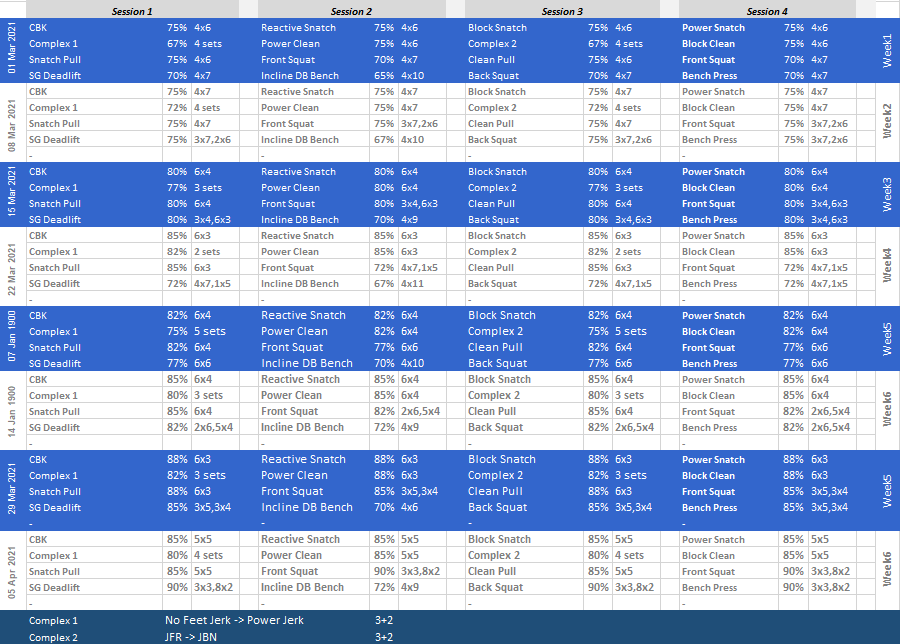
This is a good way to monitor if your training intensity is matching the percentages of your program.
There’s two ways of measuring this, both of which assess the subjective difficulty of the exercise.
- The simplest is a CR10 / 1-10 scale, with 10 being the hardest, and 1 being the lowest difficulty. Each number corresponds to a proportionate 10% increase in maximal exertion. Eg: working at 90% of 1RM should be equivalent to RPE:9
Description of exertion Borg rating of your exertion Training Examples
Extremely weak 0.5 Warm up or cool down Very weak 1 weak 2 Moderate 3 Somewhat hard 4-5 Aerobic Zone Strong 6 Very hard 7-8 (>8) High intensity intervals and anaerobic training zone Very, very hard 9-10 - The gunner Borg Scale, is the same scale, but doubled (1-20), multiplying the gunner borg result by 10 should give the equivalent heart rate at which a person is training, , eg: GB scale:12 = 120 beats per minute.
| Description of exertion | Borg rating of your exertion | Examples (for most adults <65 years old) |
| None | 6 | Reading a book, watching television |
| Very, very light | 7 to 8 | Tying shoes |
| Very light | 9 to 10 | Chores like folding clothes that seem to take little effort |
| Fairly light | 11 to 12 | Walking through the grocery store or other activities that require some effort but not enough to speed up your breathing |
| Somewhat hard | 13 to 14 | Brisk walking or other activities that require moderate effort and speed your heart rate and breathing but don’t make you out of breath |
| Hard | 15 to 16 | Bicycling, swimming, or other activities that take vigorous effort and get the heart pounding and make breathing very fast |
| Very hard | 17 to 18 | The highest level of activity you can sustain |
| Very, very hard | 19 to 20 | A finishing kick in a race or other burst of activity that you can’t maintain for long |
Limitations
-
- Requires instruction time
- Takes practice to become proficient.
- Perceived effort is subjective
- Clients may over or under estimate
Heart rate monitoring
Limitations:
- Need skill monitor eg: smart watch which may be inconvenient when olympic lifting
- Requires calculations
- Can only be used as an estimate
- Error range of potentially plus or minus 11 bpm
Target heart rate (THR)
50-90% of MHR. (220-age)
Calculated by multiplying the MHR by percentage:
- x 0.5 (50% THR) – lower THR zone
- X 0.6 (60% THR)
- X 0.7 (70% THR)
- X 0.8 (80% THR)
- X 0.9 (90% THR) – upper THR zone
Heart Rate Reserve (HRR)
Heart rate reserve takes the current fitness into consideration (resting heart rate) and increases the resting heart rate by an appropriate amount. This is important as no two people will react the same way, solely based upon their age. HRR is calculated in the following way:
HRR = MHR – RHR
The various training zones are shown below, and are on your starter sheet resource

Pages: 1 2

Comments are closed, but trackbacks and pingbacks are open.